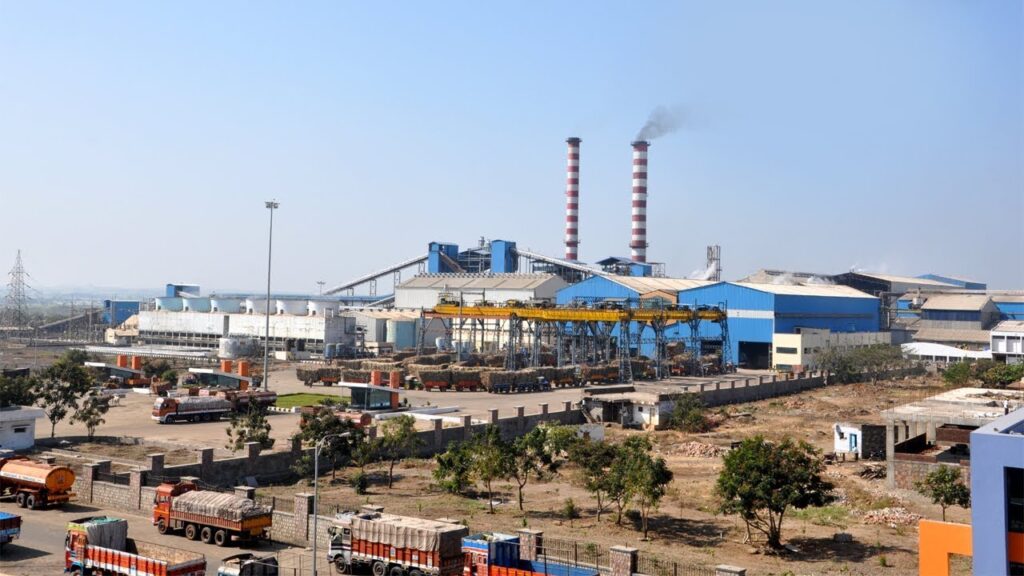
According to Aristotle, the father of political science, human beings are social, communal, and political animals, and therefore, it is essential and necessary for them to live in harmony with society, as their desires and aspirations vary and are unique. In such times, after the creation of the world, agriculture became the occupation discovered by humans. The industrial system emerged to modernize such agriculture. The Industrial Revolution was the primary inspiration for changes in human needs, desires, and lifestyle. The Industrial Revolution was not born under a single purpose or demand. Beyond that, when the industrial system spread, the world expanded its reach from constricted to vast. During this period, the ideas of Karl Marx, revolutionary principles, and the aspirations and demands of the oppressed and exploited laid the foundation. Based on these ideas and to secure their rights, the American Revolution (1776), the French Revolution (1789), the Bloodless Revolution (1688), the Bill of Rights (1689), and the Russian Revolution (1917) all played a significant role in re-establishing the rights of the exploited classes. Subsequently, in the 18th and 19th centuries, the Industrial Revolution re-emerged in England. This revolution was not confined to Britain alone but spread to countries where workers’ rights were being violated, taking great strides towards protecting those rights. As a result, in democratic and egalitarian nations, the workers’ cry (for rights) against the powerful system gained legitimacy. Consequently, the industrial revolution took on a new dimension in protecting the rights of the exploited classes in the nation. This was not only for the Industrial Revolution. This industrial revolution, without being limited, spearheaded the struggle to free nations caught in the clutches of slavery and colonialism. Subsequently, most nations gained independence in the 18th and 19th centuries. During the First World War (1914-18), this industrial revolution somewhat lost its momentum. After 1920, nations like America, France, Russia, England, and China prepared plans to adapt to new industrial policies and modern systems.
Origin of the Industrial Revolution :-
The Industrial Revolution has an ancient history. Comparatively, when viewed, the Industrial Revolution began in Britain in the 1780s after the decline of the feudal system and other systems. Through the adoption of industrial policy in countries like Europe, America, and France, this industrial revolution gradually began to be recognized globally through the transformation of the country and the use of machinery in production methods. From the 1820s to the 1840s, new chemical production gave a greater impetus to the iron production process. In this context, it is necessary to understand the factors and circumstances that led to the Industrial Revolution. After the decline of the feudal system under kings and feudal lords, and in the context of protecting the rights of the oppressed and working classes through the Magna Carta project implemented by King John in 1215, worker unemployment, rising population, increasing prices of daily necessities, declining imperialism, and colonialism all paved the way for the Industrial Revolution. The ideologies of Karl Marx, John Locke’s limited democracy, Mill’s utilitarianism, Mao’s egalitarianism, and the Cultural Revolution all fueled the Industrial Revolution. Among them, Lenin’s the ideology not only questioned the capitalist system but the Russian Revolution also paved the way for its overthrow. Naturally, a new system is born.
Causes of the Industrial Revolution:
The causes of the Industrial Revolution are complex and remain debatable. The Industrial Revolution can be said to be the result of social and institutional developments that occurred in Britain during the 17th century after the British Civil War and at the end of the feudal system. The presence of a large domestic market in Britain where the Industrial Revolution took place is also considered a driving force of the revolution.
In the discussion about the beginning of the Industrial Revolution, Great Britain is seen to be ahead of other nations. The Industrial Revolution was successful due to the availability of feudal resources that Britain possessed. Britain’s small geographical size has a dense population. The enclosure of common land (total land encroachment for cultivation) and the sudden availability of labor due to the related agricultural revolution. In Britain, around 1688, a stable political situation and the British society’s receptiveness are considered factors that led to the Industrial Revolution.
Social Impacts:
In relation to social structure, the Industrial Revolution was a witness to the victory gained by the middle-class industrialists and entrepreneurs against the landlords. Regarding the elite class and common people:
● Industrialization facilitated the creation of industrial urbanization.
● The Industrial Revolution paved the way for the child labor system.
● It encouraged population growth.
● Due to the Industrial Revolution, labor became centralized, and mills, factories, and mines became centralized.
Industrial Development (India):
Industrial development plays a crucial role in the economic development of a nation. According to Sir M. Vishweshwaraya, he said, “Industrialization or Perish.” After independence, during Nehru’s tenure, special importance was given to industrial development. Currently, India is the 10th largest nation in industrial development. Nehru gave special importance to large-scale industries in the public sector and called them “Temples of Modern India.”
The Industrial Policy of 1948 was announced by the Government of India on April 8, 1948. This is called the first Industrial Policy. More than just a policy, it defined the nation’s economic system as a mixed economy. This policy is also known as India’s first economic policy.
Importance :-
● Job creation
● Capital savings
● Resource utilization
● Growth of entrepreneurship
● Achievement of rural self-reliance
India’s Industrial Sector:
Industries play a crucial role in economic development. Industrialization and economic development are considered synonymous. Rapid development of any country is possible only through industrialization. All countries that are considered developed and wealthy nations in the world today are advanced in the industrial sector. The fact that a country cannot develop without industries is proven by the condition of many backward nations. Industrial growth is the criterion for classifying countries as backward and developed. Industries are like the eyes of a nation. It is difficult to imagine a nation’s economic development without industrial development. For India, which is a predominantly agricultural nation, industries are essential. It is a true fact that a country’s material wealth and industrial development go hand in hand.
The importance of industries in India’s economy:
● Creation of employment
● Increase in national income and per capita income
● Agricultural development
● Development of transport links
● Increase in production capacity
● Stability and self-reliance
● Rapid economic development
Objectives of Industrialization in the Indian Economy:
● Establishment of a social system that provides equal opportunities and social justice
● Improving the living standards of the people
●Increasing production
● Job creation
● Establishment of a mixed economic system
● Achieving control over the private sector
Reforms in Industrial Policy:
● Cancellation of licenses for all industries except 6 industries due to security or environmental reasons.
● Liberalization of the localization policy.
● Encouraging private sector participation in infrastructure development such as fuel, telecom, road transport development.
● Liberalization of the flow of foreign direct investment into India.
● Freeing up some industries reserved for the small-scale industrial sector.
Objectives and Goals:
● To create a conducive environment for robust industrial growth.
● Comprehensive industrial development in the state, creating 10 lakh jobs by 2024.
Background of Industrial Development in India :-
After agriculture, another sector of equal importance in our economy is industry. It can be said that the role, importance, and significance of industry are embedded in the saying: ‘Agriculture is the backbone for human economy, industry is the muscle, and transport is the nervous system.’ Recently, efforts have been made to industrialize the economy. The processes of understanding industry as industrialization are increasingly being observed.
Industrialization:
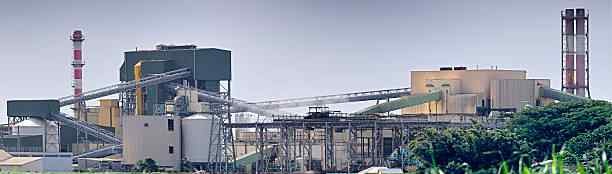
Industrialization is the collective balanced state of development in fields like industries and related processes such as mining, factories, mills, industrial centers, production units, power plants, transportation, communication, etc. Our planning architect, Sir M. Visvesvaraya, analyzed the role of industrialization, stating that industrialization is the fundamental element for India’s economic development. Currently, in our developing economy, the reliance on industrialization as a primary factor for national development has gained special significance. For our current growth, industrialization is both necessary and inevitable.
Importance of industrialization in the economy:
1. Increased reliance on industries not only boosts national production but also significantly raises national income and per capita income. This leads to an improvement in the standard of living for those dependent on industries.
2. Industrialization eliminates unemployment. Apart from agriculture, industry is another sector that helps in solving our unemployment problem. The industrial sector plays a significant role in providing alternative employment opportunities to agricultural laborers, thereby reducing the pressure on agriculture.
3. The complete development of agriculture directly depends on the industrial sector. Industry helps not only in providing necessary machinery for agriculture but also in the survival of agro-based industries.
4. Through industrialization, all natural resources available geographically can be utilized effectively. Wasted resources are systematically utilized for the development of industries.
5. As industries develop, on one hand, the production of consumer goods increases, and on the other hand, with increased consumption of consumer goods, demand and supply for industrial goods emerge, expanding the market.
6. Industrialization expands civilization. The research and production of new consumer goods allow people to experience social life. Civilization becomes possible through the production of diverse goods.
7. Stability cannot be maintained in the agricultural sector. However, in the industrial sector, stability can be maintained according to the demand and supply of goods. This brings the entire economy within the scope of a stable state.
8. The development of industries increases public revenue. During the process of production and sale of goods, the government receives various direct and indirect taxes. This provides the government with the energy to bear public expenses.
9. The situation where the country relies on import trade to meet the demand for goods within the country is eliminated through industrial development. The industrial sector helps in preparing goods within the country by utilizing available raw materials.
10. Industrialization helps in eliminating poverty, which is a fundamental problem of the economy. Industry helps the unemployed to rely on self-employment and lead a self-reliant life.
11. Very high industrial growth brings international recognition to the country. By researching and producing prestigious goods, we can attract the attention of global nations.
12. Industrialization brings in more foreign exchange. As the production of exportable goods increases, so does the foreign exchange. This covers a large part of the capital expenditure of the economy.
13. Industry provides external and internal security to the nation. The industrial sector provides not only consumer goods but also military equipment necessary for the country’s defense.
Problems of Industry or Reasons for India’s Industrial Backwardness:
1. Lack of capital
2. Lack of effort
3. Lack of technology
4. Unsuitable social environment
5. Disorganized transport
6. Public cooperation not received on time.
7. Dilemma of dual policy.
8. Dual zone policy.
9. Affection/attachment for foreign goods.
10. Burden of high taxes.
1. Lack of capital: Capital is the basic fuel for economic development. India, a developing economy, is plagued by a shortage of capital, especially in the industrial sector. Compared to the agricultural sector, the industrial sector requires a large amount of long-term capital. Both circulating and fixed capital are necessary for industrial development. The inability of sources to provide the necessary capital due to a lack of savings, investment accumulation, and capital mobilization has led to the stagnation of the industrial sector.
2. Lack of effort: Compared to agriculture, industry requires a different kind of labor. This sector, which includes a very large number of illiterate and uneducated individuals, is unable to participate in high production due to a lack of training and suitable education among its unskilled laborers.
3. Lack of Technology: Technology is the fundamental seed for industrial development. As more research and inventions happen in technology, new technological tools are produced. However, due to the continued adherence to a culture of borrowing technology without indigenous innovation, the output of our industrial sector has significantly lagged.
4. Transportation Disruption: Roads play a crucial role in transporting finished goods to the market and raw materials to industrial centers. Raw roads that are useful for only a few months of the year and unusable otherwise hinder industrial development. Railway transport should be available to all industrial centers in the country. It has not been possible to provide. The inadequate state of transportation has caused our industrial sector to lag behind.
5. Unsuitable Social Environment: In the traditional Indian social environment, industries have not been able to gain social status like agriculture, which is the primary occupation. Industry is considered a foreign occupation, something against tradition, and this widespread disagreement has prevented industry from becoming as deeply ingrained in our economy as agriculture.
6. Lack of Timely Public Cooperation: For any sector to progress, cooperation from all other sectors of the economy is crucial. However, from government policies to commercial banks, financial institutions, agriculture, transport, trade, and other enterprises, the collective cooperation of all these sectors is not available for the development of industry. Such a lack of public cooperation is a reason for the lagging state of industries.
7. The Dilemma of Dual Policy: The simultaneous implementation of dual policies in our economy is the reason for the decline in our industrial output. On one hand, there is the traditional method of production, and on the other, a scientifically-based production method. In such a dual situation, the industrial sector experiences a decline in output because it cannot adhere to any specific policy.
8. Dual Sector Policy: The characteristics of India’s economy, which relies on a mixed economy, can be said to be detrimental to industrial development. On one hand, there are industries under government control, and on the other, industries controlled by capitalists under the private individuals and organizations. Joint venture companies exist between these, and thus the industrial sector, not falling under a specific sectoral scope, is experiencing a decline in development due to the lack of supportive policies.
9. Affection for Foreign Goods: It can be said that the reason for the decline of our industrial sector is our people’s affection for foreign goods. We can see the situation where industries are suffering losses due to lack of demand for domestic products. Because of this, it might feel like foreign goods are invading our market and encroaching upon domestic industries.
10. Heavy Tax Burden: Many industrialists are suffering under an unbearable tax burden. Income tax, production tax, sales tax, special tax, and so on… A large part of the profit from the manufactured product is lost in the form of taxes, which is why entrepreneurs hesitate to invest in the industrial sector.
Industrial Policy:
After independence, several specific policies were formulated in India to support economic development, including the industrial sector. Industrial Policy, Agricultural Development Policy, Population Policy, Foreign Trade Policy, and others were formed according to necessity and stood as milestones of development.
In the country, understanding the status and conditions of existing industries, all rules, regulations, programs, priorities, etc., undertaken by the government for their development are called Industrial Policy. Industrial Policy has been specifically formulated. It can be said only after independence. The industrial policies formulated so far can be reviewed as follows, according to the times.
● 1948 Industrial Policy
● 1956 Industrial Policy
● 1977 Industrial Policy
● 1980 Industrial Policy
● 1991 Industrial Policy
1. State Bank of India: Apart from the Central Bank, the State Bank of India, which is responsible for financial transactions as its sub-branch, is a major source especially for providing capital for industrial development. State Bank of India, through its subdivisions located throughout the country, provides a large number of short-term loans for industrial development.
2. Commercial Banks: It can be said that after the nationalization of commercial banks, the functions of banks expanded significantly into the industrial sector. Today, commercial banks play a significant and important role in providing financial assistance for the development of industries.
3. Insurance Companies: Several insurance companies are systematically working to provide the necessary finances to large industries. Insurance companies provide various types of financial assistance to industrial enterprises based on the current and fixed assets of business organizations, shares, and public deposits.
4. Indigenous Banks: Unorganized local private financial individuals and institutions under the control of the central bank are indigenous banks. These banks provide financial assistance for industrial development based on the movable and immovable assets of an enterprise. The role of such indigenous banks is more prominent in industrially concentrated areas like Bombay, Delhi, Allahabad, etc.
5. Share Capital Institutions: Share capital institutions accept deposits. The public can invest their deposits in any enterprise according to their capacity. Here too, the institution provides returns to the public who have deposited money, based on profits and losses.
Listing various financial institutions and corporations :
1. Industrial Finance Corporation of India – (IFCI)
2. Industrial Development Bank of India – (IDBI)
3. Industrial Credit and Investment Corporation of India (ICICI)
4. National Industrial Development Corporation (NIDC)
5. Industrial Reconstruction Corporation of India (IRCI)
6. Unit Trust of India (UTI)
7. Life Insurance Corporation of India (LIC)
8. Small Industries Development Corporation (SIDC)
●Foreign Capital: When the capital required for industrial development cannot be met by domestic sources within the country, foreign capital from outside the country comes to the rescue for industrial development. Such sources include:
1. World Bank (IBRD).
2. International Monetary Fund (IMF).
3. International Bank for Industrial Development (IBID).
4. Capital invested by foreign governments.
5. Capital directly invested by foreign private investors.
6. Capital desired to be jointly invested by foreign industrialists with domestic industrialists.
Importance of Public Sector Undertakings:
In a socialist background, the role of the public sector can be considered very significant from the perspective of the country’s overall development. From the broad perspective of our economy, the role of the public sector is immense.
Advantages and Disadvantages of Public Sector Undertakings:
Both the advantages and disadvantages of managing public sector enterprises can be understood.
Advantages:
1. Large industries can be established.
2. Defense equipment can be manufactured.
3. Production of essential consumer goods becomes possible.
4. Can participate in industries conducive to development.
5. Transport and markets expand.
6. Regional industrial equality can be realized.
7. Decentralization of income and wealth can be achieved.
8. Employment opportunities are created.
9. An increase in national and per capita income is observed.
10. Resources can be utilized effectively.
Disadvantages:
1. Due to flawed planning, project costs increase.
2. Capital is wasted.
3. Management is hampered due to lack of capacity.
4. Unnecessary expenses increase.
5. Laborers working beyond necessity.
6. Shortage of raw materials and fuel.
7. A large number of sick industries are found.
8. Industries incurring losses due to a service-oriented mindset, without profit.
9. Industries declining day by day due to improper economic policies that fail to balance demand and supply.
10. Private Sector Enterprises.
●Private Sector Enterprises :-
If the ownership and supervision of enterprises are under the control of private capitalists, such enterprises can be called private sector enterprises.
Importance :
1. Private capital becomes involved in the mainstream of economic development.
2. Industries that cannot be achieved by the government can be achieved by the private sector.
3. More and more consumer goods are produced, and the demand of consumers is met.
4. It is a way for the unemployed to undertake self-employment.
5. An increase in the country’s national income is observed.
6. Local resources are utilized efficiently.
7. Production of internationally recognized goods becomes possible.
8. More foreign exchange becomes available.
9. More revenue becomes available to the government.
10. Industries operate with utmost efficiency.
Characteristics:
1. Ownership of the industry belongs to private individuals.
2. Profit-making is the primary objective of these industries.
3. Individual opinions are given importance.
4. It leads to the concentration of wealth.
5. Changes can be brought about as per necessity and circumstances.
6. Private capital is not invested in industries that may incur losses.
7. Workers are generally subjected to exploitation by owners.
8. Due to direct control over workers, their efficiency increases.
9. Emphasis is placed on the quality of production.
10. A good working environment is found due to competition.