Murugesh Nirani’s Early Life :-
Murugesh R. Nirani, born on July 17, 1966, in Inam Hanchinal, a small village in Bilagi taluk of Bagalkot district, is a prominent Indian politician and industrialist who has made significant contributions to the state’s political and economic spheres. His life story is one of hard work, vision, and leadership. His early life experiences in a rural agricultural community are deeply rooted, and his resolve to improve the lives of those around him has been shaped by these experiences.
From a young age, Nirani observed the challenges faced by rural farmers. This profoundly influenced his perspective. His upbringing in an agricultural family instilled in him a strong work ethic and a deep understanding of the socio-economic problems plaguing rural India. These early experiences later focused his commitment to public service and became a major aspect of his political career, emphasizing rural development.
Education played a very important role in Nirani’s life. Before earning his engineering degree, he received his schooling at local institutions. This provided him with a strong foundation to understand the technical and infrastructure needs of a developing state like Karnataka. His engineering background, coupled with practical skills, enabled him to. It developed the knowledge to become a leader, especially in areas related to industrial growth and economic development.
Nirani’s entry into politics was driven by a strong desire to bring about positive change in their community. Their early political career actively engaged with local issues, especially those related to agriculture, rural development, and infrastructure. With their ability to connect with common people and their practical approach to problem-solving, they quickly gained a reputation as a dedicated and effective leader.
Childhood :-
Murugesh R. Nirani was born on 17-07-1966, the day of Krishna Janmashtami, as the elder son to Rudrappa Nirani and Susheelamma Nirani in Inam Hanchinal village of Bilagi taluk. He has four siblings, two of whom are there are sisters.
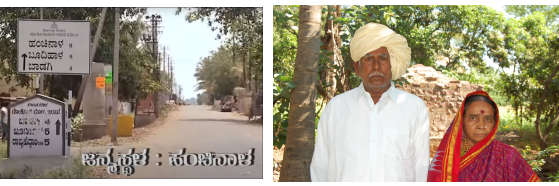
Theirs is a joint family. Their father had four brothers, and their father was the youngest in the family, meaning the fourth one. Their family system is a model of a joint family where everyone lives together. No elders in their house were educated, but they were kind-hearted and had cultivated the values of life like justice, honesty, and righteousness. In short, they were cultured. They had learned from childhood how to live with neighbors and how important honesty is in life. They had learned about helping from childhood. The quality of helpfulness and cooperation was instilled in them by their family. Their family fulfilled all their needs from a young age. Even excessive demands were met with contentment in their family. Thus, the lessons of ethics learned from their family were more important than what they learned in school.
Family Background :-
Murugesh R. Nirani comes from a traditional farming family rooted in Inam Hanchinal village of Bagalkot district in Karnataka. Born into a farming community, Nirani’s family was deeply involved in agriculture, which was the primary source of livelihood for their generations. This rural and agricultural background profoundly influenced Nirani’s values, work ethic, and his subsequent political and industrial pursuits.
The Nirani family, like many others in this region, adapted to the challenges of rural life including climate changes, uncertainties in agricultural yields, and limited availability of resources and infrastructure. These experiences fostered a sense of resilience and self-reliance within the family. This became characteristic of the Nirani family as they progressed in their own lives and careers.
Nirani’s parents, who worked hard and had a deep connection with their land, instilled in Nirani a strong sense of responsibility and a deep appreciation for the value of education. They emphasized not only hard work but also the importance of acquiring knowledge to improve one’s circumstances and contribute to the community. This encouragement and support from their family were crucial in shaping Nirani’s early ambitions and their decision to pursue higher education.
Despite the challenges of rural life, the Nirani family placed great value on education. They recognized it as a tool for upward mobility and social change. This belief is reflected in their decision to support Nirani’s education, enabling them to pursue their studies and ultimately earn a degree in Engineering. Their academic achievements were not just personal victories; they stand as a testament to their family’s values and aspirations.
The influence of Nirani’s family supported his education. His upbringing in a close-knit rural community instilled in him a deep sense of social responsibility and commitment to public service. The values of hard work, integrity, and community service he received from his family became the foundation and guiding path of his political career.
As Nirani ascended to prominence in politics and industry, he maintained close ties with his family and ancestral relations. This is seen as a reflection of the values and principles instilled by his family, which guided his life choices and decisions. The support and foundation provided by his family were crucial in his ability to navigate the complexities of public life while remaining loyal to his roots.
Bijapur, renowned for its architectural marvels, is home to the world-famous Gol Gumbaz. This is a symbol of regional importance. On the other hand, Bagalkot is celebrated for its ancient art and historical landmarks, and Badami, Pattadakal, and Aihole are famous sites. These centers of art and history daily draw upon the grandeur of Karnataka’s heritage.
The geographical landscape of Bijapur-Bagalkot is shaped by the presence of five rivers. The mighty Almatti Dam stands as a testament to engineering prowess in the region. However, this area is also marked by a paradox of abundance and scarcity. While the rivers provide water, farmers in this region depend on rain. Due to the construction of the dam, several villages were submerged, and countless farmers were displaced, losing their fertile land. The sacrifice of these farmers has enriched neighboring districts. The people of Bijapur-Bagalkot are progressing in life, facing the challenges of economic hardship. The people here are rich in heart. They even weighed the country’s Prime Minister with gold.
M.N’s Education :-
Murugesh R. Nirani’s educational journey, despite the challenges of growing up in a rural area with limited resources, stands as a testament to his determination and the value his family placed on learning. In villages like Inam Hanchinal, where education itself is scarce, Nirani’s achievement in knowledge is a remarkable accomplishment.
His early education began in local schools in Bilagi. There, he studied in the nearest available primary school. Even though educational infrastructure was not developed in this area, Niraniya showed great interest in his studies. This was motivated by the encouragement of his family. He recognized the importance of education in shaping his future.
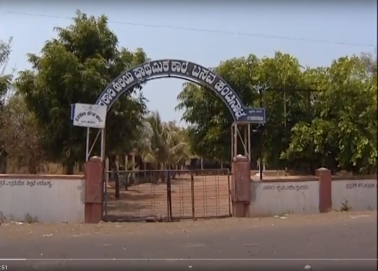
After completing his primary education, Niraniya proceeded to pursue higher education in nearby towns as there was no high school in his village. This phase of his life required him to travel a considerable distance daily, reflecting his commitment to his education. Despite the challenges of long commutes and balancing school with his responsibilities at home, Niraniya excelled in his studies.
Recognizing his potential, his family supported his decision to pursue higher education, understanding that it would equip him with the necessary knowledge and skills for greater opportunities. Later, Nirani went to study at college. There, he focused on subjects that would play a crucial role in his career as a leader and industrialist.
Throughout his academic career, Nirani maintained a deep connection with his family roots. He often returned to his village during breaks to help with farming and other family responsibilities. Education and his agricultural background and education gave him a unique perspective on the needs and challenges of rural communities.
The education provided by Nirani laid the foundation for their future achievements. It equipped them with the tools to navigate the complexities of industrial and political spheres. Their ability to combine academic knowledge with practical experience later became a distinctive feature of their leadership style. This enabled them to address the needs of their constituents and foster significant development in Karnataka’s industrial sector.
The early education of Murugesh R. Nirani reflects the simplicity and challenges of growing up in a rural village like Inam Hanchinal. He completed his school education from 1st to 7th standard in the Kannada Primary Government School in his village. At that time, the village faced a lack of proper school infrastructure. The school was divided into two parts – one section for classes 1 to 3, which included a two-room school near Agasi village, and another section for classes 4 to 7, which was called “Bungalow School.” It was customary for the elders of the village to call the building constructed with Mangalore tiles as Bungalow School. Students who studied in this school felt proud to have progressed to higher classes.
In his childhood, Murugesh Nirani displayed sharp intelligence. He excelled particularly in mathematics. His keenness with numbers set him apart and he quickly earned the admiration of his teachers. Especially in calculations, no one could surpass him. Teachers would explain, and he would quickly solve and show the calculation by holding up his slate in front of them. While explaining lessons, his teachers often used him as an example, and his exceptional grasp of subjects gave him the opportunity to become a leader in the class. Nirani’s leadership abilities began to shine during these early school years. There, he would guide and lead his classmates.
Nirani’s childhood was not just about academic matters. They actively participated in the daily tasks of rural life. On Sundays and holidays, they would help with household chores in the morning. Later, they would take the cattle and calves for grazing. They engaged in various activities like competing in buffalo races, swimming in local streams, climbing mango and tamarind trees, and sharing fruits with friends, which highlighted their adventurous spirit and generosity. The day was spent with friends in open fields.
Their primary school classmates Shankar Gidasannavar, Kolur Siddu, Sindhur Nayak, Kambara Kallappa, Kolur Ningappa, Geetha, Kashibai, and Sunanda formed a close-knit group, and these relationships helped shape their social and leadership skills. These early experiences laid a strong foundation for Nirani’s later achievements, instilling in them academic excellence, leadership qualities, and a deep connection to their friends and family roots.
In 1979, after completing 7th standard in Inam Honchal, Murugesh R. Nirani went to Mudhol town to continue his education. There, he successfully completed his high school education. This marked a new chapter in his academic journey. Nirani’s progress in higher education was supported by R.M.G. College in Mudhol. There, he enrolled in a Pre-University Course (PUC) focusing on Science. This was a crucial time in his life as it laid the foundation for his future professional endeavors.
His interest in science and mathematics led him to pursue higher studies in engineering. Nirani gained admission to B.E. Civil Engineering at BVB College, a prestigious educational institution in Hubballi. This transition marked a significant step not only academically but also personally, as it involved adapting to a new environment, a new college, and a completely new campus.
However, the decision to study engineering came with mixed feelings in his family. While Nirani had an inclination towards the field he chose, his family elders had a dream of seeing him as a doctor. This difference in expectations highlights the broad aspirations his family had for him. It reflects the family’s desire to see him succeed in a respectable and stable profession.
Despite the initial challenges of adapting to an unfamiliar environment, Nirani quickly found his footing. The solitary early days soon gave way to a period of growth and transformation, as he became more comfortable in the new academic setting. His time at BVB College further deepened his knowledge of Civil Engineering. All of this further enhanced his leadership abilities and laid the foundation for his future contributions to the field and society.
Their education at this stage was crucial in shaping their future career path, preparing the ground for their later success as an industrialist and political leader. The experience of adapting to new environments and overcoming challenges proved invaluable in their subsequent professional and political endeavors.
Murugesh R. Nirani’s family elders decided his marriage while he was in the final stage of his B.E. Despite his initial hesitation, Nirani agreed to respect the family’s decision, as it was his uncle’s decision, and his authority in the family was unquestionable. No one dared to question the decisions made by the elders in Nirani’s family.
The chosen bride for Nirani was Kamala. Kamala is Nirani’s cousin, meaning his elder sister’s daughter. This was a way to strengthen family ties and was also a tradition deeply rooted in their culture. This marriage was significant in strengthening family relationships more than just uniting two individuals. Their marriage was performed along with their uncle’s children. The wedding took place with great pomp on February 17, 1991. A large crowd from surrounding villages came, calling it a ‘Sahukara’s wedding’. However, it truly looked like a fair or a mass wedding festival, but all the grooms who got married were Nirani’s brothers.

Murugesh R. Nirani, after completing his B.E., obtained a Diploma in Business Management (DBM) from Fergusson College, Pune, with the consent of his family elders. While some family members hoped he would pursue a career in government service after completing his DBM, Nirani had different plans. He decided to forge his own path and instead chose to engage in independent work. In this context, the person who provided strength, inspiration, and served as an ideal for such decisions was the esteemed personality of Mudhol, Sri S. T. Patil.
When Nirani was studying in high school, he was honored in his own school. He was already a popular leader who had achieved a lot. Lokapur Cement factory was opened. He accepted the honor and explained the path he had taken to grow. It was then that dreams began to emerge for Nirani. He wanted to become an entrepreneur like them, build a grand palace, and establish factories. These dreams showed him the way to become an entrepreneur. These aspirations stemmed from his admiration for Patil and his own entrepreneurial spirit they were encouraged. They were put on the path to becoming successful entrepreneurs. Nirani’s decision to pursue entrepreneurship instead of a government job was a significant moment in his life. This will help mark the beginning of his journey towards realizing the dreams he nurtured since his youth.
Student Life and Education :-
Leadership is deeply intertwined with personality through the combination of internal and external factors within the environment. An individual’s personality includes their actions, words, and behavior. These play a crucial role in shaping how they influence and interact with others in a social system. This interaction is usually more pronounced in individuals who possess certain innate qualities. This naturally draws others towards them. They are recognized as leaders.
Leadership emerges when an individual demonstrates strong inner awareness and motivation to protect and advance the interests of others. These leaders have the ability to understand the needs of their community and develop strategies to address them. Their actions can have immediate or long-term positive or negative impacts on individuals and society.
Although everyone has some level of leadership ability, not everyone has the same desire or enthusiasm to lead the leaders are commonly identified by their unique ability to disseminate common emotions and sensitivities in a way that resonates more powerfully than others. Their leadership is characterized by a high sense of responsibility and a commitment to the well-being of the community.
This leadership process is a natural extension of an individual’s personality. Here, their mental and emotional qualities align with their role as a leader. Leaders possess an enhanced ability to focus on the community’s interests. They sacrifice personal gains for the greater good of the community. This selflessness and dedication are key characteristics that define true leadership. All these qualities distinguish leaders from their followers.
Personality development requires an environment. This environment depends on internal and external factors. Generally, the reactions displayed by a healthy person can be given social meaning. Personality is a natural human trait that reveals a person’s behavior and speech to others. In a social environment, this trait mutually influences individuals. Its dominance is often greater on some individuals. This can have profound and widespread effects on individuals and society, either immediately or later. This characteristic found in individuals has an attractive and repulsive power. It is natural to identify those who attract others towards themselves as leaders, chiefs, or guides. Such individuals generally possess a strong inner awareness and motivation to protect the welfare of others. Leaders, through their inner awareness, develop the ability and strategies to respond to the aspirations of the community. These are the people.
M.N’s Full Family :-
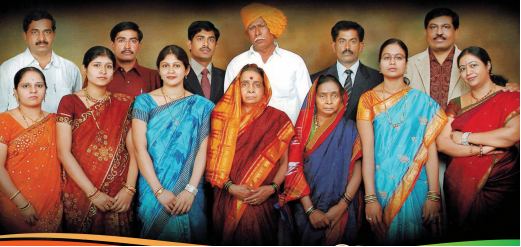
Murugesh R. Nirani is a person who believes that a difficult life is a school that teaches discipline. He is determined to wait for the results while being dutiful, believing that “the outcome is yours.” Dreams of friends should be present in work, as dreams are the foundation for a future life. We should have the mindset to turn dreams into reality. This will make tomorrow’s days in our favor. Let this faith and loyalty be ours; words are not needed, actions are. No slogans, only achievements. As Sarvajna said, “He who acts without speaking is superior in practice,” and internalizing these thoughts, leaders like Shri Murugesh R. Nirani, filled with courage in their ideas, have become active and fruitful.
Their life’s work progressed towards self-employment. After earning a B.E. degree, they started the Nirani Automobiles and MRN branded tractor trailer manufacturing business with the idea of “I should live, and others should also live with me,” finding mutual growth as a life goal. They were recognized as a friend of farmers and agriculturalists and achieved success. The 1990s decade changed the direction of their life. This decade became life for their life. This was a golden age that provided skills, life values, life transformations, and ways forward. In this context, both working hands became active, and the brain became sharp. New ideas led to new practices and thoughts. It led to a readiness to adhere to the principle of “Labor is Victory.” How so? This decade led them into the sugar industry. In 1997, a factory was established in India that crushed 500 tons of sugarcane per day, making it the smallest in India. This mini sugar factory has today emerged as the country’s largest sugar factory.